BathroomsLeesburg, VA
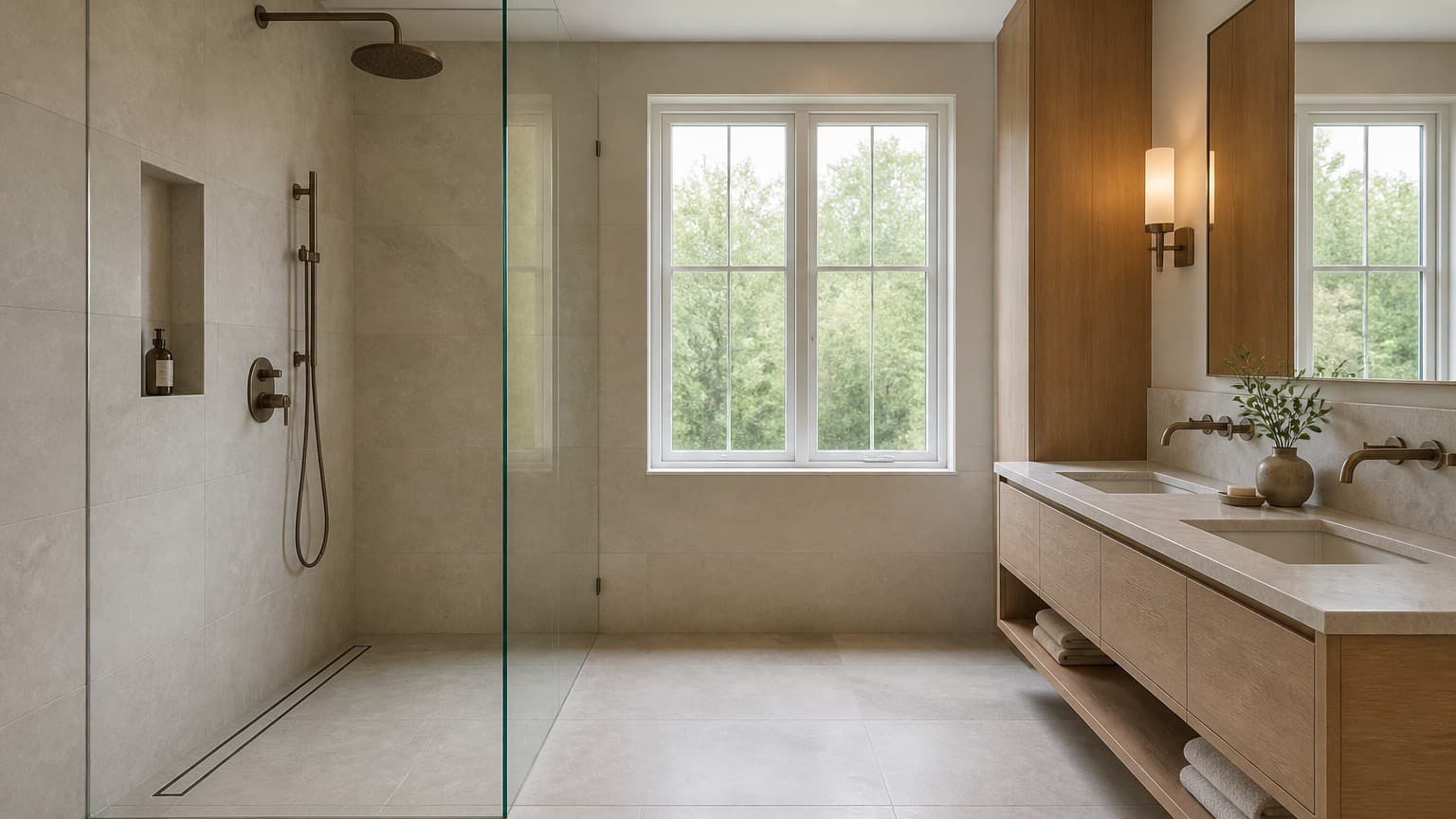
Curbless primary bath in large-format porcelain
Full bathroom renovation with a curbless shower and heated stone-look floor
Completed September 2025
Tile is not waterproof and neither is grout. The layer that keeps water out of your building sits underneath both, and it is the part you will never see.
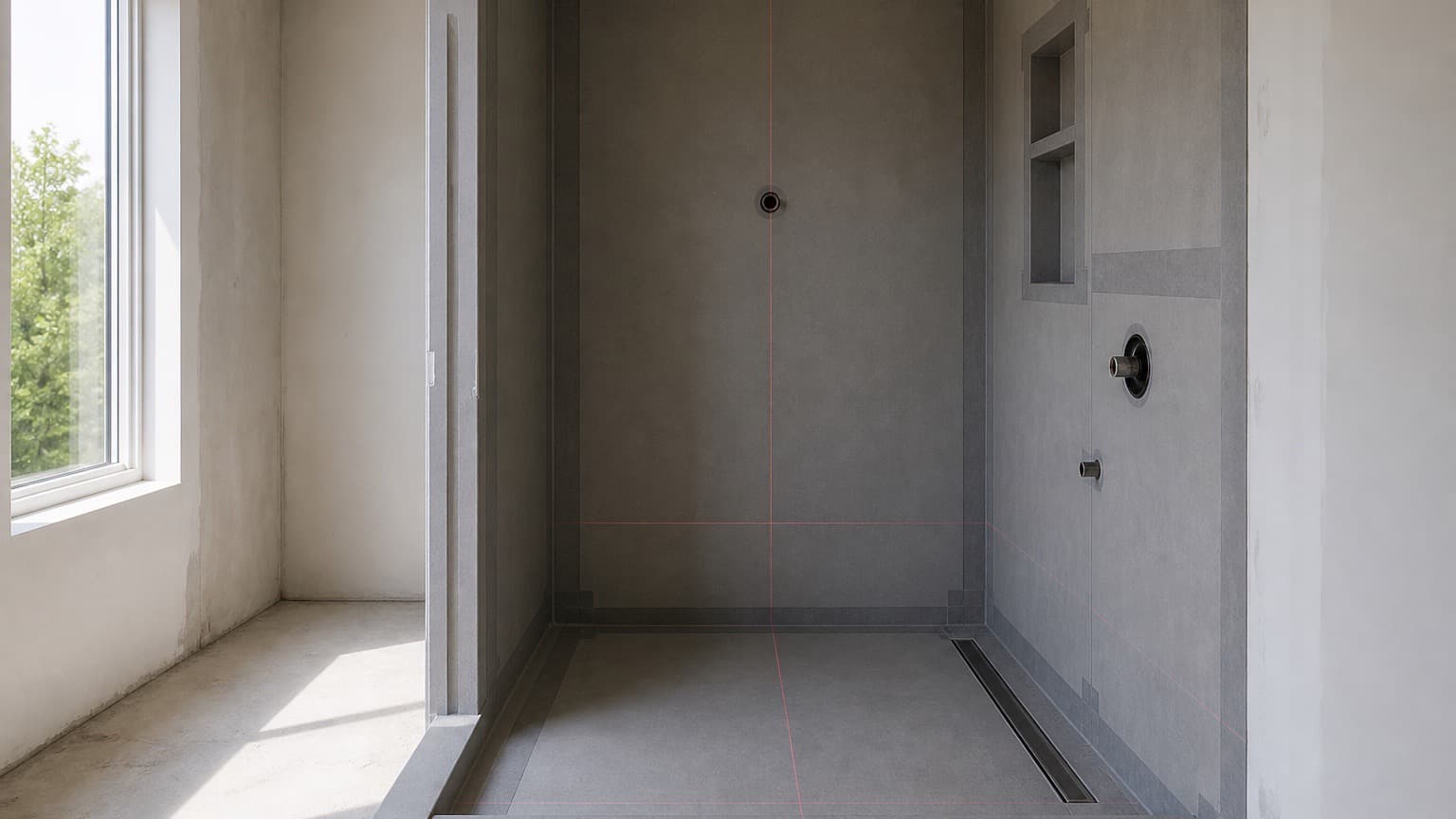
Concept image — replace with documented site photography
Almost every shower failure we are called to look at has the same cause. Somebody treated the tile as the waterproofing. It is not, and it never was.
Porcelain absorbs very little water, which is why it is a good surface for a shower. But a tiled wall is not a continuous surface. It is a field of tiles separated by grout joints, and cementitious grout is porous by design. Water passes through the joints, reaches whatever is behind them, and either drains away safely or does damage.
This is normal and expected. The assembly is designed on the assumption that water gets behind the tile. The question is what it finds when it does.
Behind the tile there should be a continuous, bonded waterproofing plane: either a sheet membrane bonded to the substrate, or a liquid-applied membrane built up to the manufacturer's required thickness. Its job is to catch that water and direct it back to the drain.
Continuous is the operative word. A membrane with a gap at one internal corner is not a membrane; it is a funnel that happens to cover most of the wall.
The five-minute test
Ask any contractor to describe what happens at the internal corner between two shower walls, and at the point where the mixer valve passes through. If the answer is 'we caulk it', keep looking.
Water needs to reach the drain from the surface and from the waterproofing plane underneath. If the membrane is flat, water that gets behind the tile sits there. Over years that produces the smell people describe as 'the shower going off', long before anything visible fails.
A pre-sloped pan solves this cleanly because the fall is formed in the factory rather than floated by hand at the end of a long day. Where a pan is not practical, the slope is built in mortar and checked with a level in several directions before the membrane goes on.
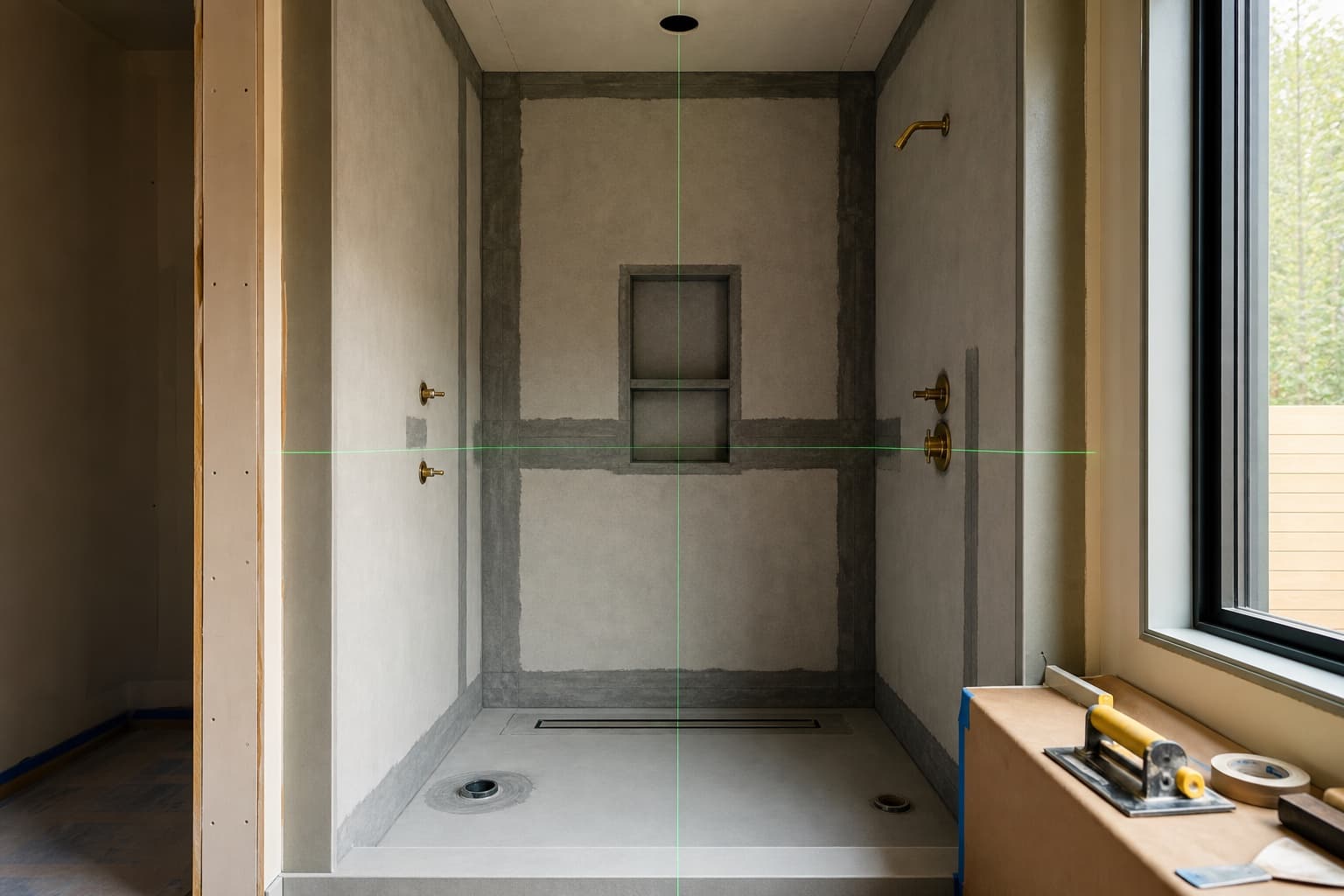
Buildings move. Tile does not. Where a tiled surface meets another material, or changes plane, or crosses a structural joint, there needs to be a flexible joint rather than grout. This is why the corners of a well-built shower are sealed with a flexible sealant and the flat fields are grouted.
A shower grouted rigidly into every corner will crack. It is not a question of whether.
Where the assembly allows it, a pan should be flood-tested before tiling: plug the drain, fill it, mark the level, and leave it. If the level drops, you have found the problem at the cheapest possible moment.
It costs a day. Finding the same fault after the tile, the glass, and the fixtures are in costs considerably more than a day.
Related serviceHow we build custom showersThe full sequence, from substrate to final walkthrough.Written by Altesora
Related questions
From the portfolio
Full bathroom renovation with a curbless shower and heated stone-look floor
Completed September 2025
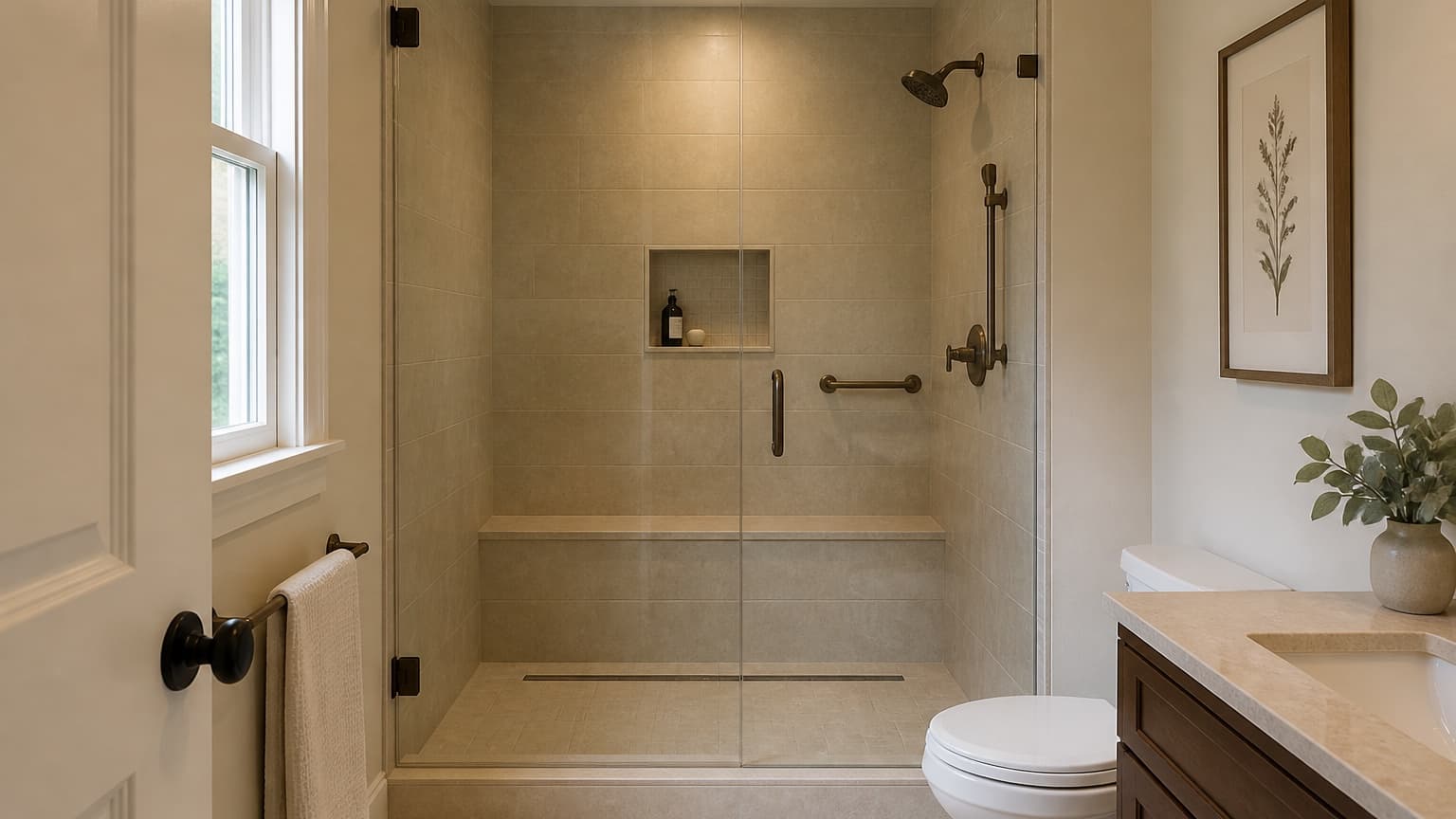
Alcove tub converted to a walk-in shower with a bench, niche, and grab-bar blocking
Completed July 2025
Keep reading
A flush shower entry is one of the best decisions available in a bathroom renovation, and one of the hardest to add late. Here is what has to be true for it to work.
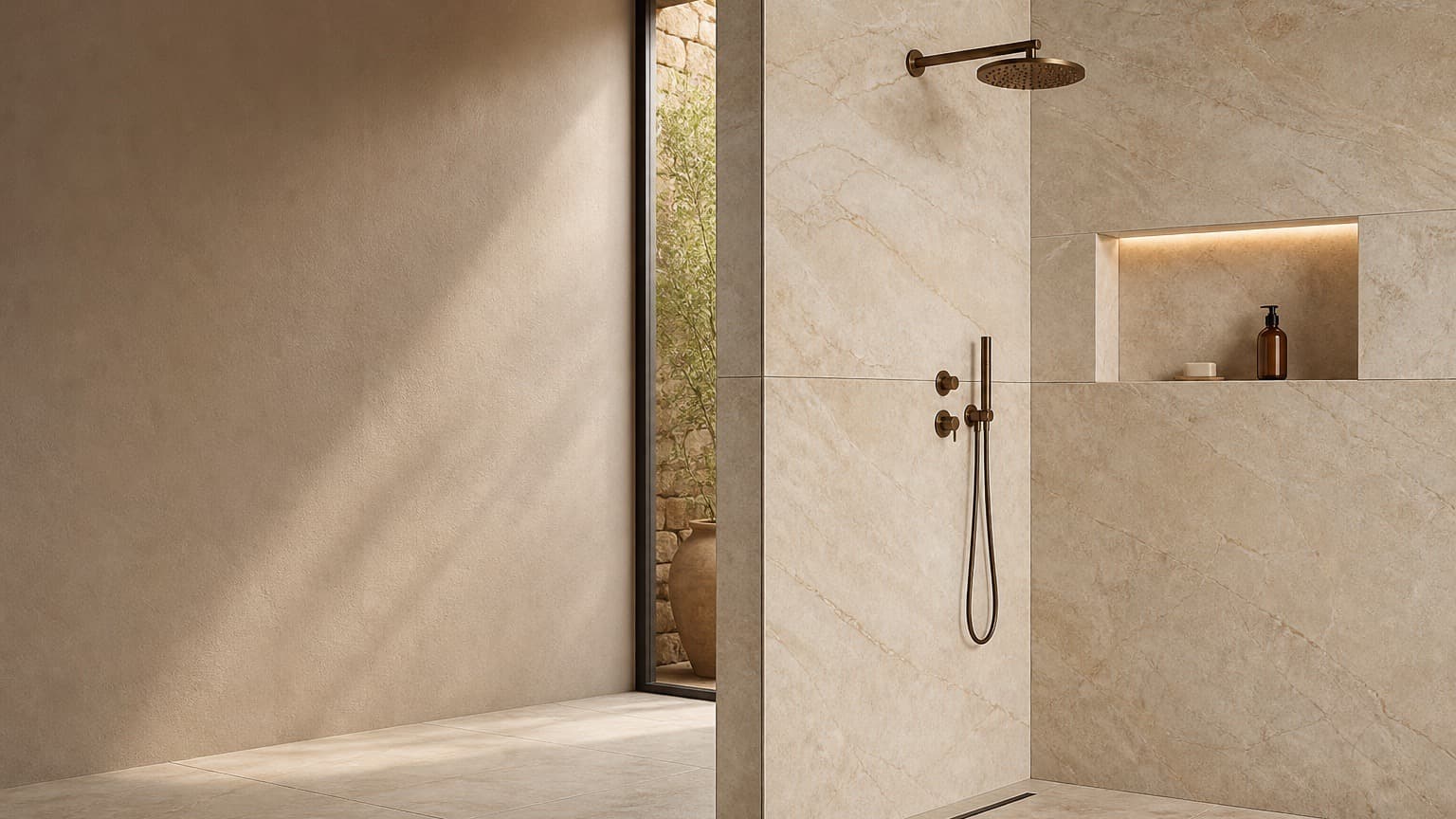
Above roughly fifteen inches on a side, tile stops forgiving. Everything that matters happens before the first panel goes up.
For your project
If this article raised questions about your own bathroom, floor, or material choice, send us the specifics. Honest answers cost nothing.
Have photographs or a drawing? Upload them with your request — it usually saves a visit.