FlooringReston, VA
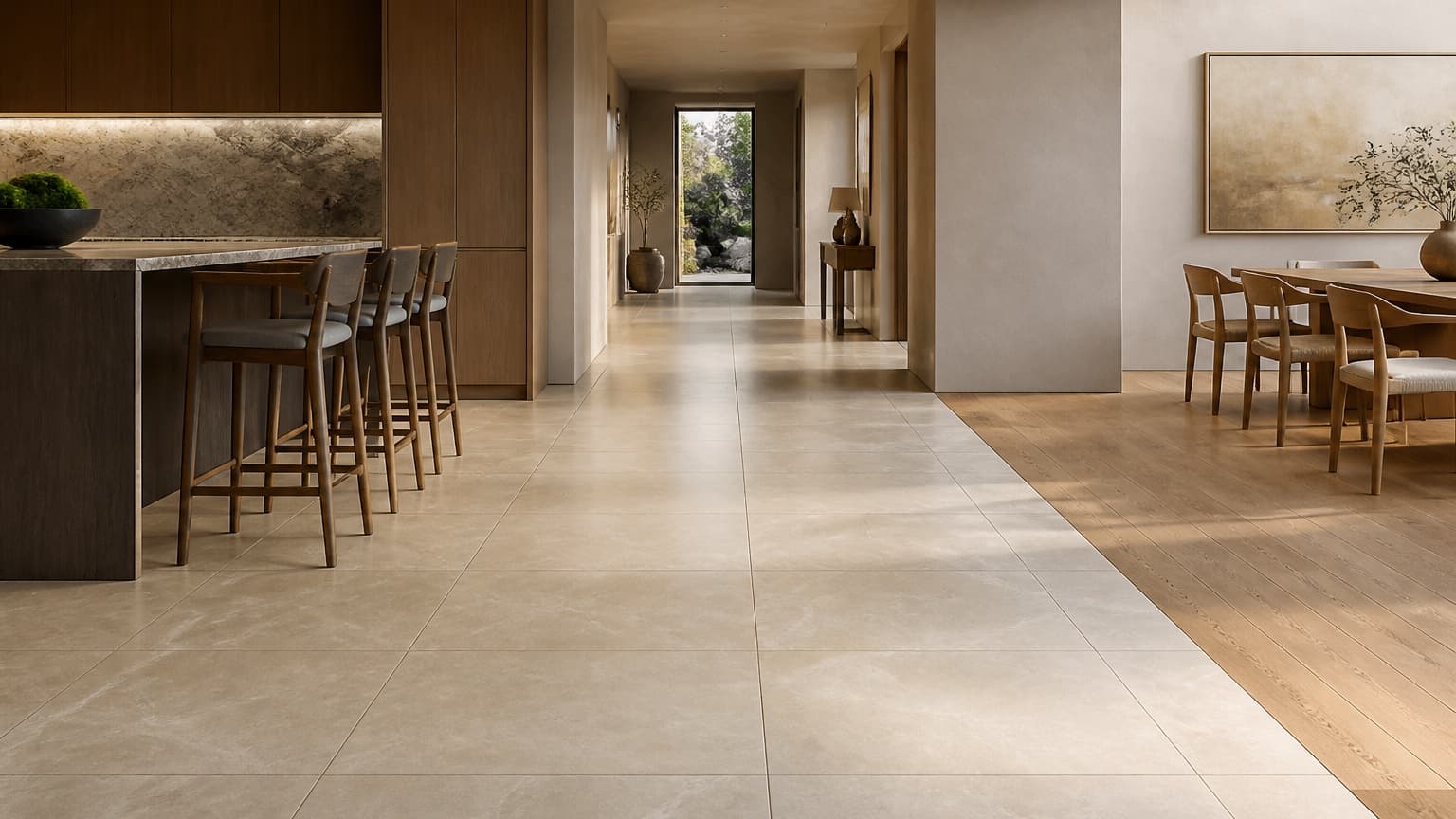
Heated porcelain floor across an open plan
Large-format porcelain flooring with electric underfloor heating across kitchen, dining, and hall
Completed February 2025
Above roughly fifteen inches on a side, tile stops forgiving. Everything that matters happens before the first panel goes up.
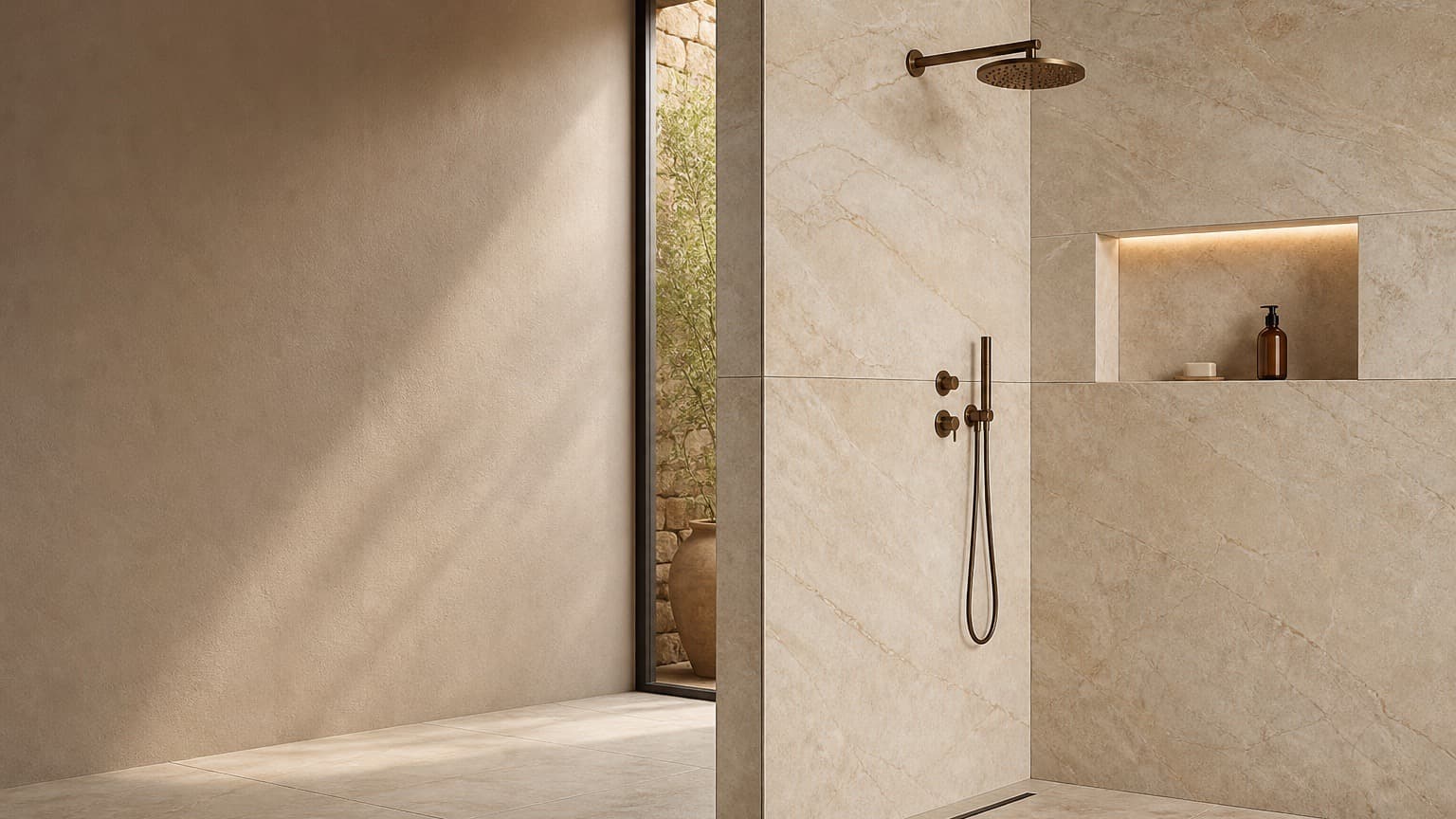
Concept image — replace with documented site photography
Large-format tile is the clearest example of a material where the visible work is the easy part. A substrate that would happily take a 150 mm mosaic will show every high spot through a 600 by 1200 mm panel.
Flatness is not one straightedge reading. It is a survey of the whole plane, taken in several directions, recorded, and corrected. A wall can be perfectly plumb and still be unusable for large format if it undulates.
The tolerance tightens as the format grows. We correct with levelling compound on floors and a render or board correction on walls, and we do it before the tile arrives rather than while it waits on the pallet.
Every tile has a slight curvature along its length. Offset two long tiles by half their length and the high point of one meets the low point of the other, producing a visible edge. That is why plank and large-format layouts are limited to a one-third offset or a stacked pattern.
If you are told half-offset is fine
For any tile longer than about 600 mm, it is not. This is a manufacturer instruction, not a preference.
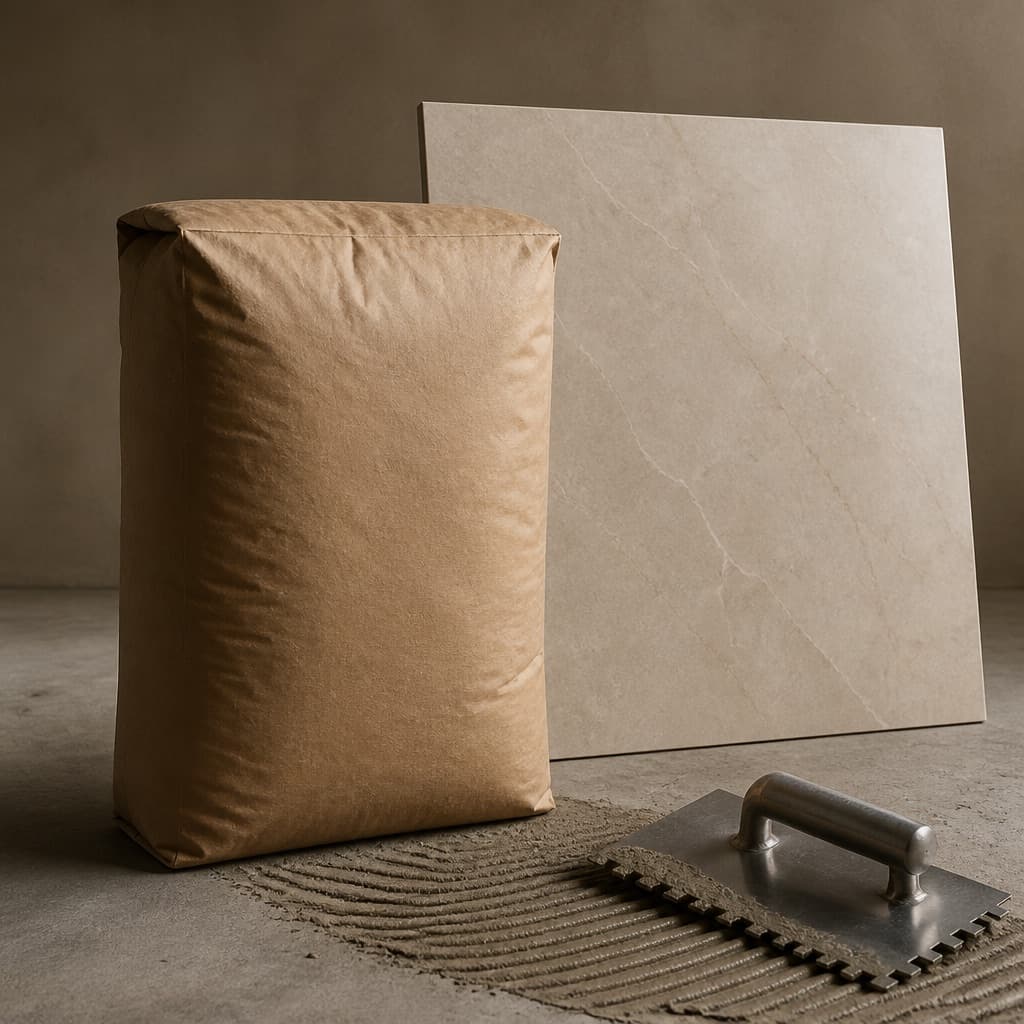
Large panels need mortar coverage across essentially the whole back of the tile. That means the right notch trowel, troweling in one direction, and back-buttering the tile as well as the substrate.
Voids behind a large panel become cracks later, usually starting at a corner where somebody stood on it.
Slab formats need a frame to move and two people to set. Cutting is done with a rail system and a wet saw for the shapes it cannot handle. None of this is exotic, but a crew that does not own the equipment will avoid the format or damage the material.
Written by Altesora
Related questions
From the portfolio
Large-format porcelain flooring with electric underfloor heating across kitchen, dining, and hall
Completed February 2025
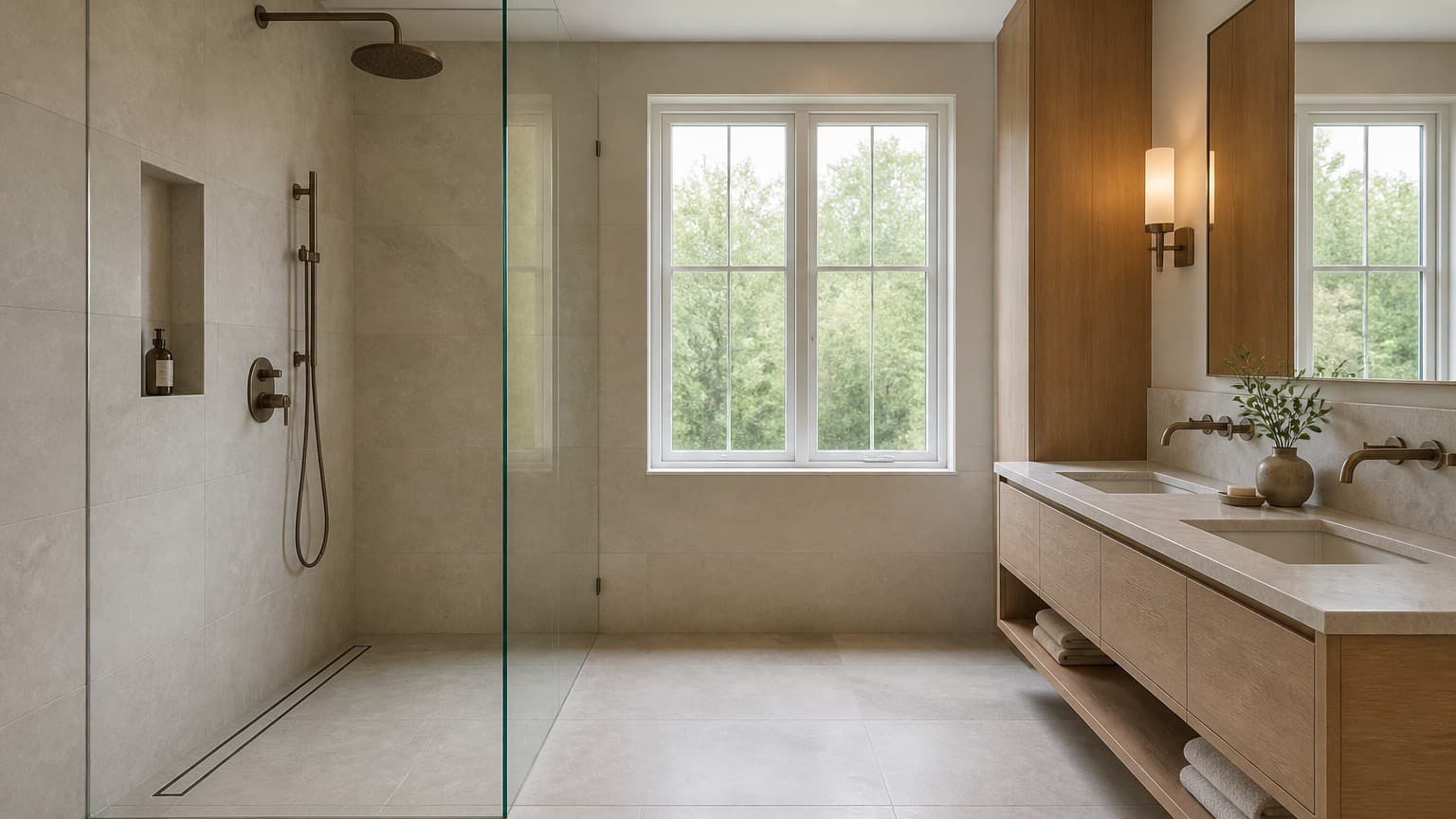
Full bathroom renovation with a curbless shower and heated stone-look floor
Completed September 2025
Keep reading
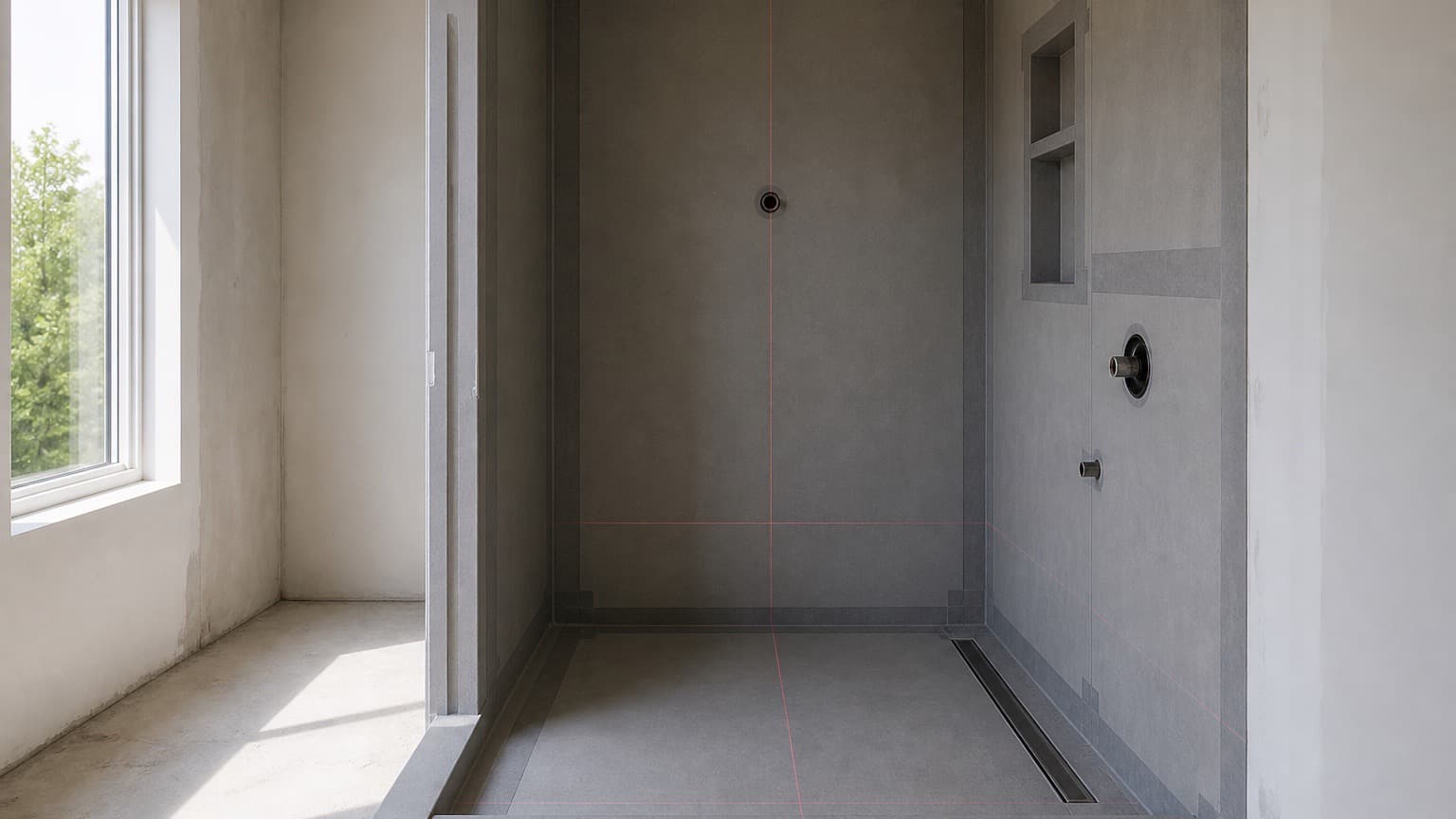
Tile is not waterproof and neither is grout. The layer that keeps water out of your building sits underneath both, and it is the part you will never see.
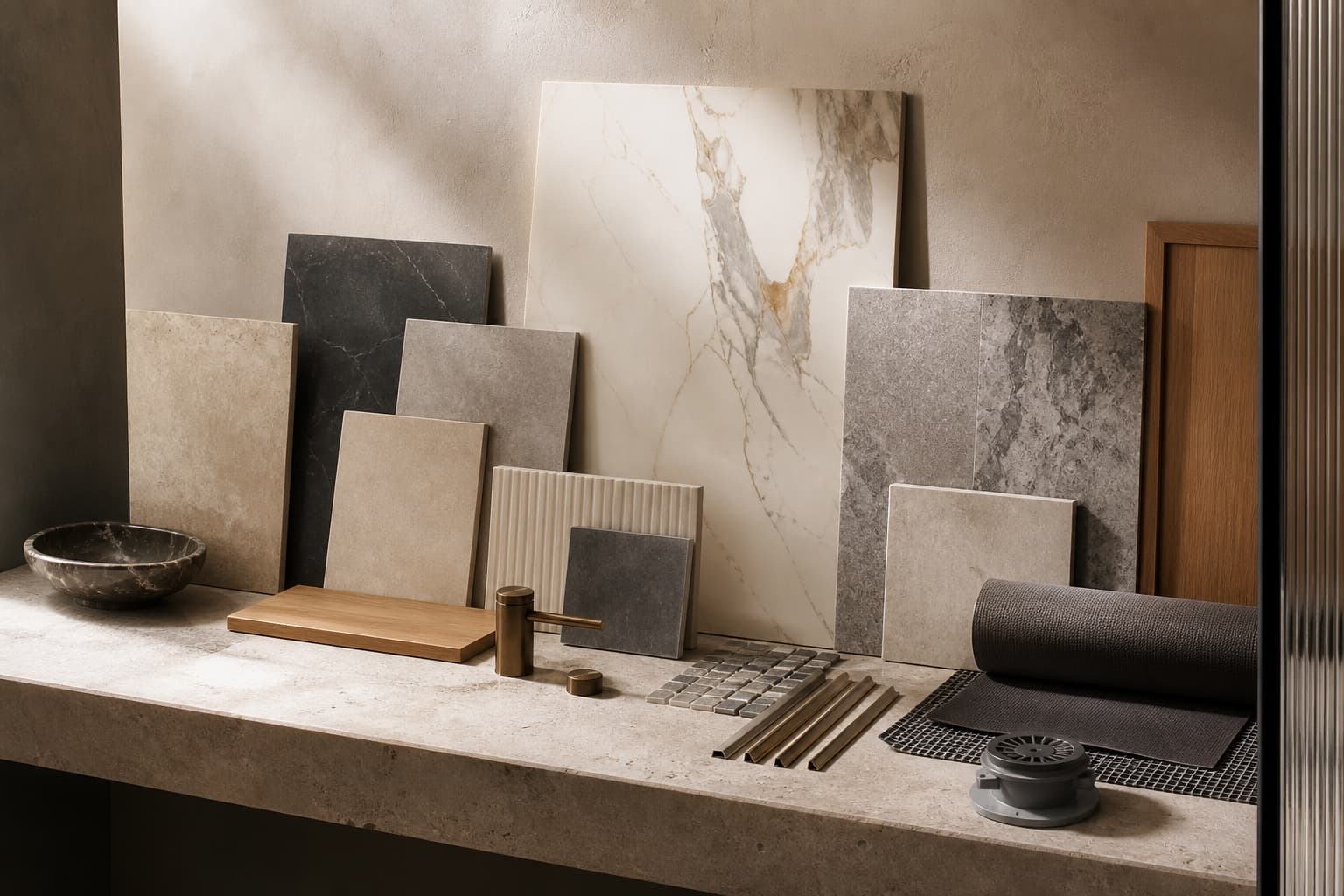
Modern porcelain imitates stone convincingly enough that the decision is rarely about appearance. It is about maintenance, tolerance for change, and where the material is going.
For your project
If this article raised questions about your own bathroom, floor, or material choice, send us the specifics. Honest answers cost nothing.
Have photographs or a drawing? Upload them with your request — it usually saves a visit.