BathroomsAshburn, VA
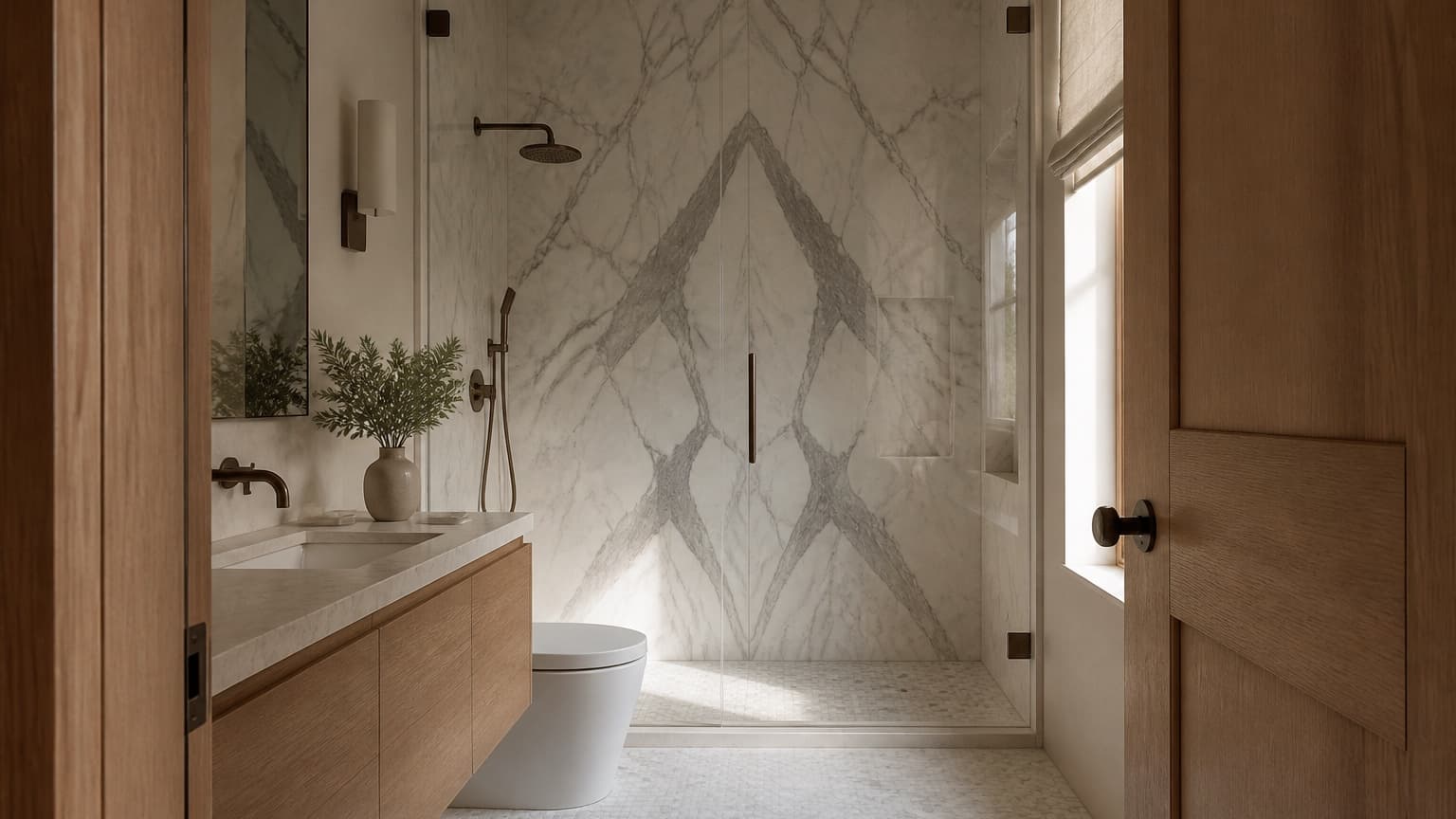
Book-matched marble guest bath
Guest bathroom renovation with a book-matched marble shower wall and mosaic floor
Completed June 2025
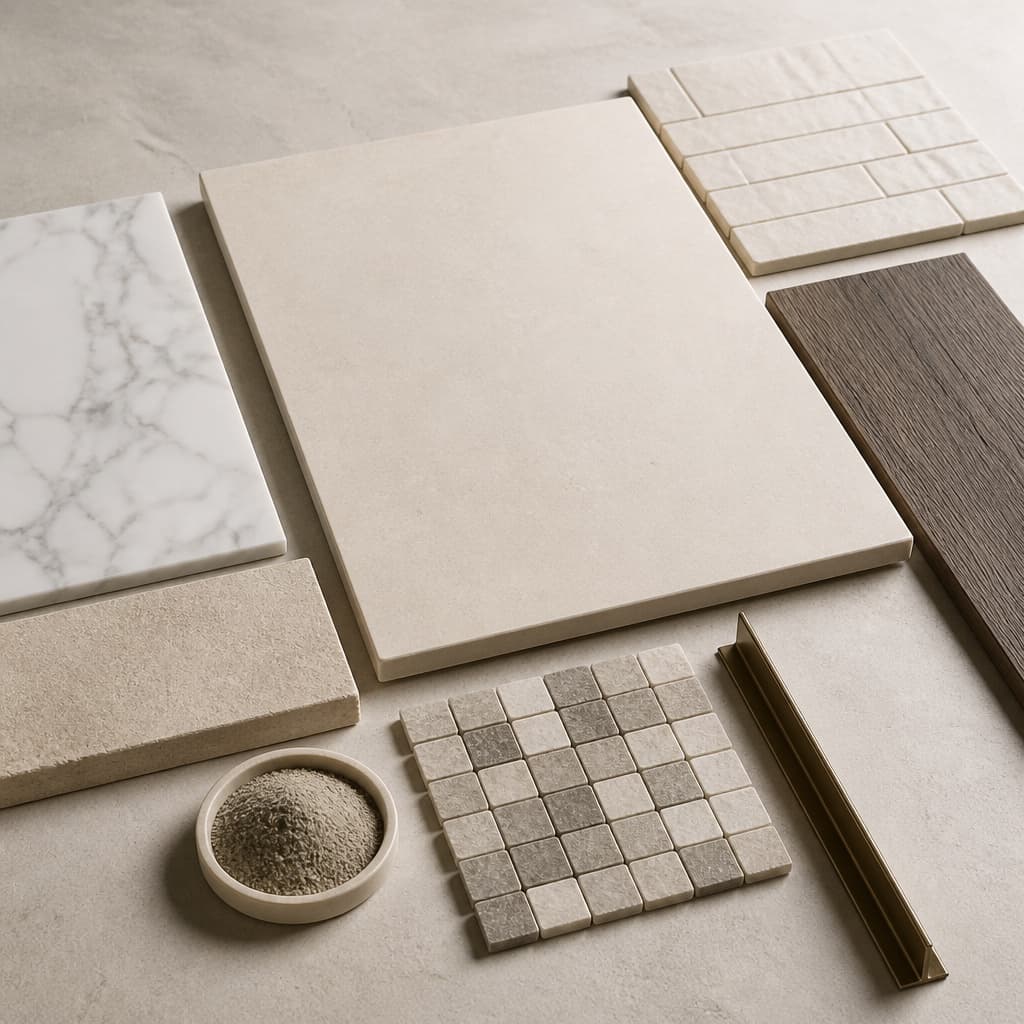
Modern porcelain imitates stone convincingly enough that the decision is rarely about appearance. It is about maintenance, tolerance for change, and where the material is going.
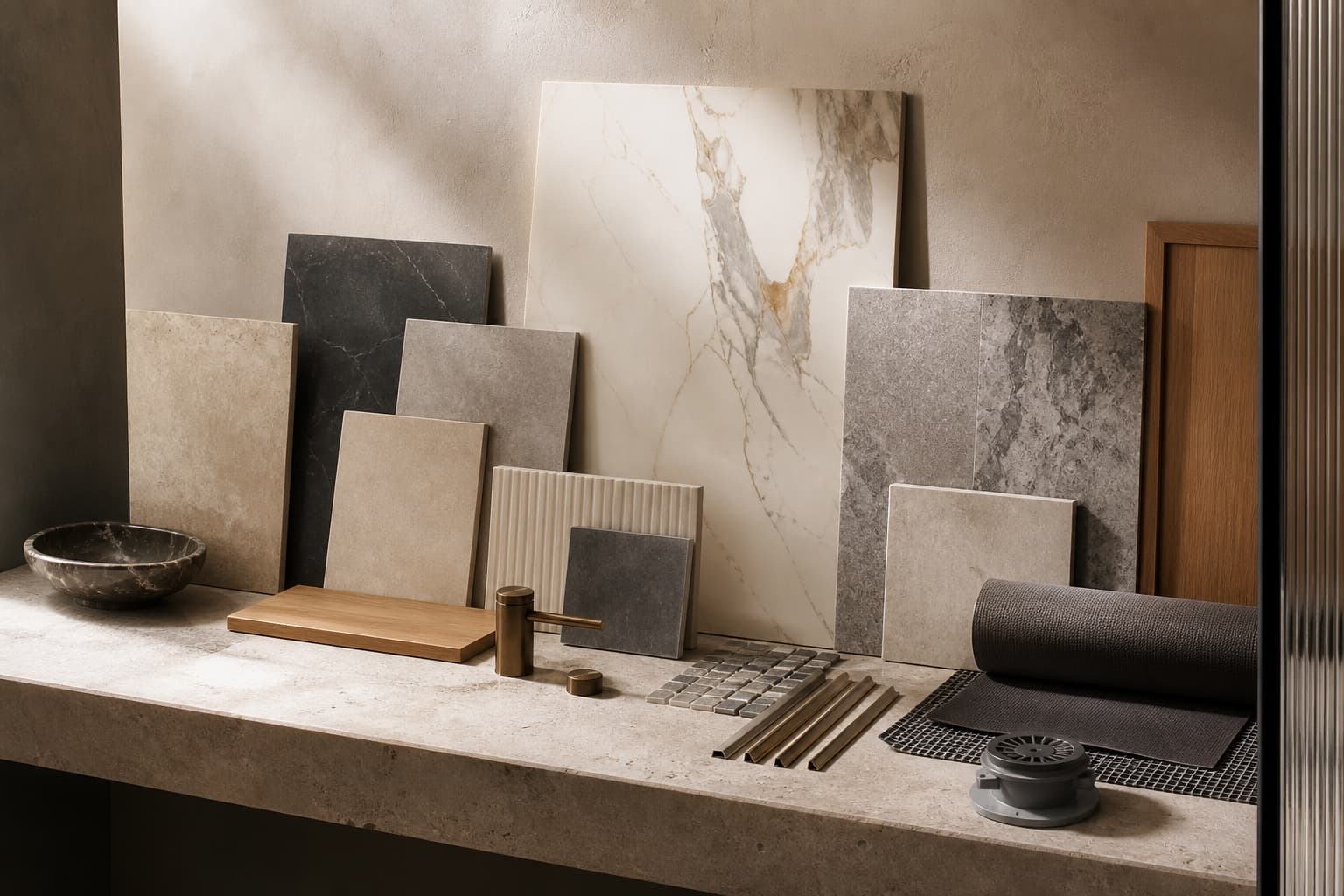
Concept image — replace with editorial photography
People usually arrive at this question having already fallen for a particular stone. That is a reasonable place to start, but the choice is better made on how the material will behave in the room you are putting it in.
Porcelain is fired dense enough to absorb almost no water. It does not need sealing, it does not etch when someone spills lemon juice on it, and it arrives with consistent dimensions, which makes tight joints and large formats possible.
Printing has improved to the point where a good stone-look porcelain is genuinely difficult to identify from standing height. The tell is usually repetition: cheaper ranges have four or five printed faces, so the same veining shows up across a floor. Better ranges have dozens.
Stone has depth that printing has not yet matched. Light enters the surface of honed marble slightly rather than bouncing off it, and the material continues to reward attention up close in a way that porcelain does not.
It can also be worked. Stone can be mitred, book-matched, carved into a threshold, or fabricated into a shelf that matches the wall it sits on. That opens details porcelain cannot easily produce.
We specify porcelain for kitchen floors and stone for the walls people stand close to. That single rule resolves most of these conversations.
Kitchen floors, entries, mudrooms, laundry rooms, and anywhere with heavy traffic and spills: porcelain, almost always. Shower walls, vanity surrounds, feature walls, and fireplace surrounds: stone is worth considering, because these are surfaces people see up close and rarely attack with acid.
Shower floors sit in between. Small-format mosaic gives the grip a wet floor needs, and both materials work — marble mosaic is beautiful and needs sealing; porcelain mosaic is close behind and does not.
Material price is the smaller half of the decision. A stone floor that needs a stiffer substrate, white mortar, two rounds of sealing, and slower cutting will cost meaningfully more to install than a porcelain floor of the same square footage, even where the tile prices look similar.
Ask for both numbers installed, not per square foot.
Written by Altesora
Related questions
From the portfolio
Guest bathroom renovation with a book-matched marble shower wall and mosaic floor
Completed June 2025
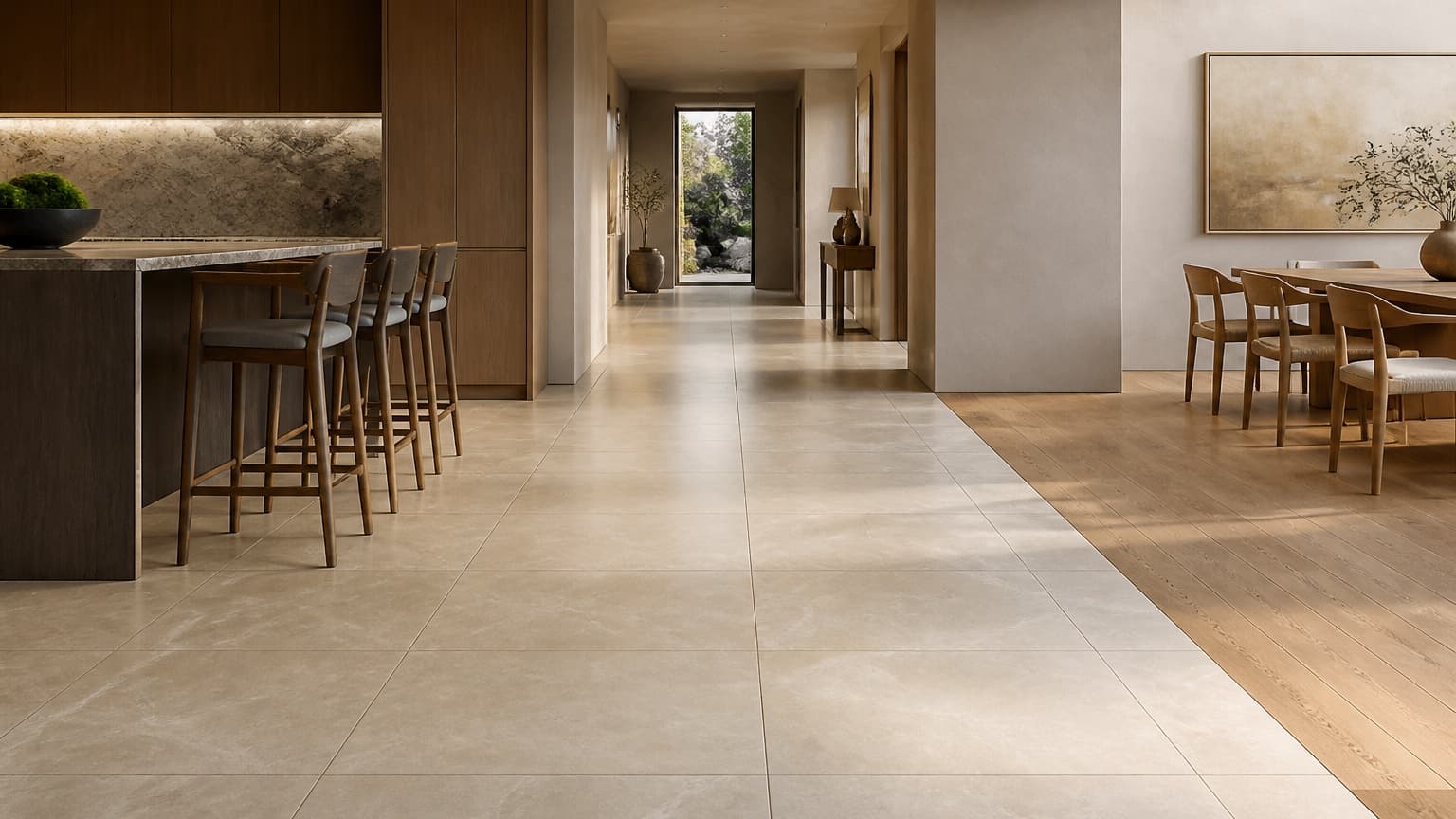
Large-format porcelain flooring with electric underfloor heating across kitchen, dining, and hall
Completed February 2025
Keep reading
Most tile regret comes from four decisions: format, finish, grout colour, and how many different materials ended up in one small room.
Most damage to finished surfaces is done by cleaning products, not by use. A short guide to keeping surfaces in the condition they were installed in.
For your project
If this article raised questions about your own bathroom, floor, or material choice, send us the specifics. Honest answers cost nothing.
Have photographs or a drawing? Upload them with your request — it usually saves a visit.