BathroomsAshburn, VA
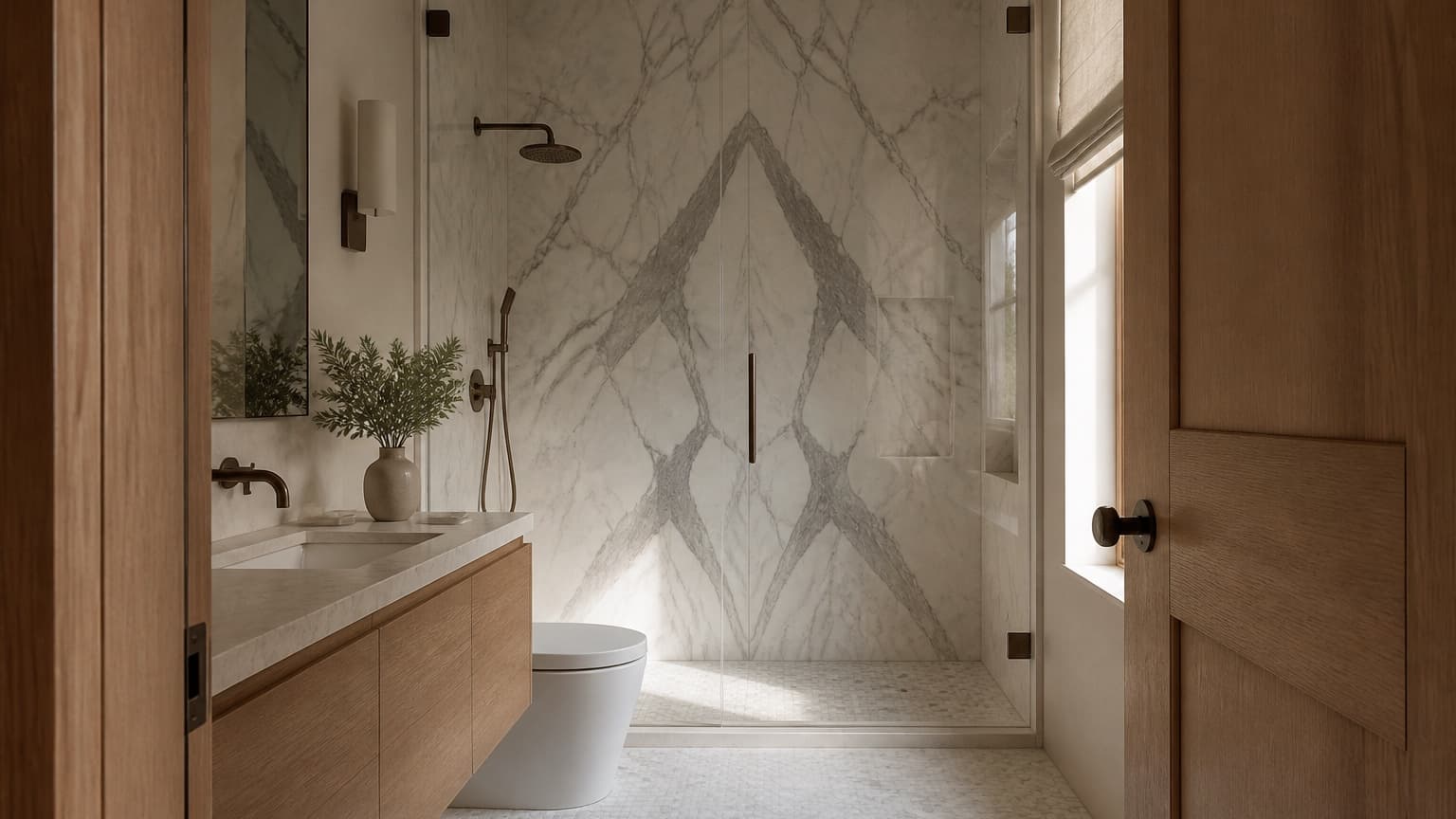
Book-matched marble guest bath
Guest bathroom renovation with a book-matched marble shower wall and mosaic floor
Completed June 2025
Most tile regret comes from four decisions: format, finish, grout colour, and how many different materials ended up in one small room.
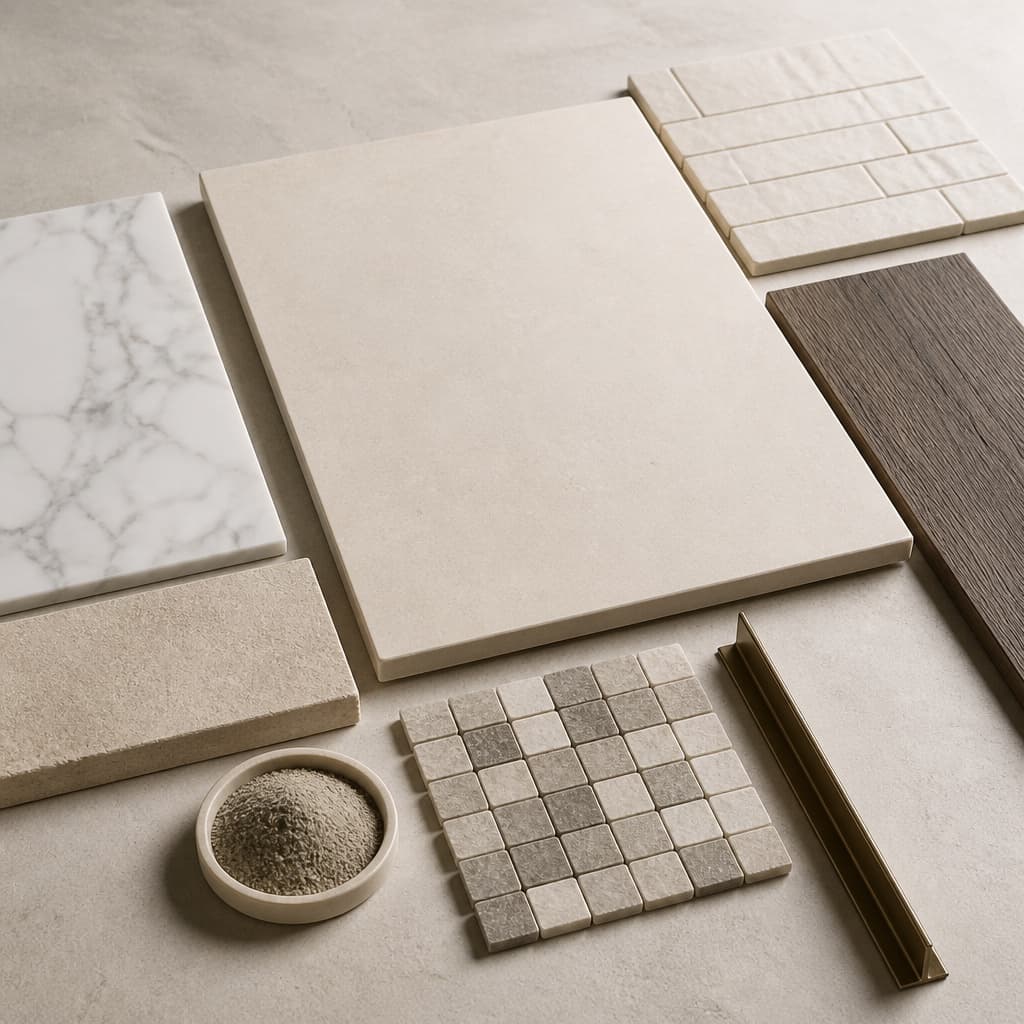
Concept image — replace with editorial photography
Tile selection tends to happen on a screen, in a showroom, and under lighting that resembles none of the above. A few habits make the outcome much more predictable.
Order full-size samples, not swatches, and leave them in the actual bathroom for several days. Look at them in morning light, in the evening with the lights on, and wet. Stone and matt porcelain in particular look substantially different wet.
A large format with tight joints reads as a continuous surface, which makes a small room feel calmer and larger. A small format with more grout reads as texture and pattern. Neither is better; they do different jobs.
Polished tile in a wet area is a decision to make deliberately. Where a manufacturer publishes a tested slip figure we will pass it on; where they do not, we will say so rather than guess. What we can tell you from experience is that a smaller format with more grout joints gives more underfoot security than any surface texture on a large panel.
Matching grout to tile makes the surface disappear into one plane. Contrasting grout turns the same tile into a grid. People routinely choose the tile carefully and then leave grout colour to the last day, which is how a calm room ends up looking like graph paper.
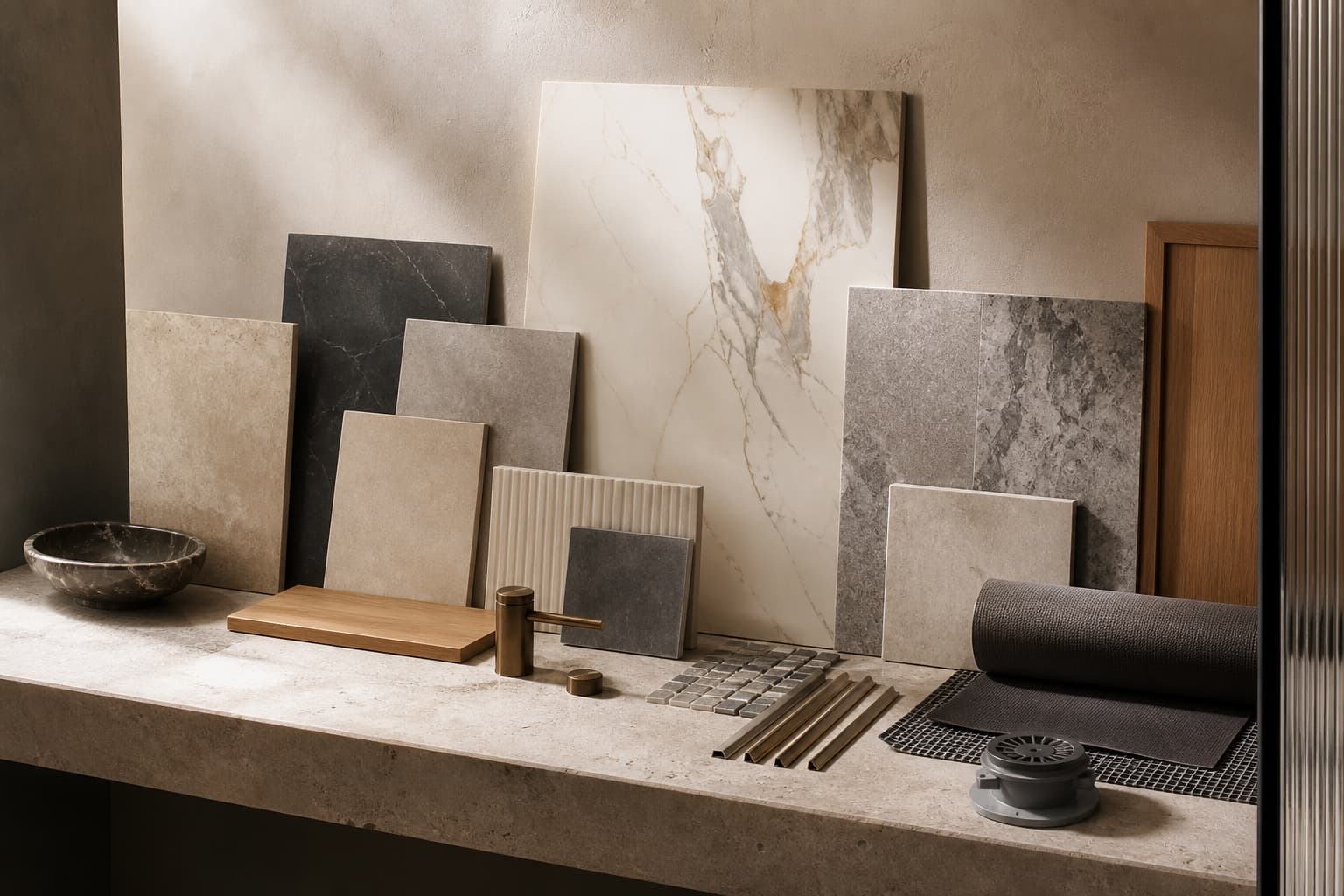
A bathroom that works usually has one or two tile materials, one metal finish, and one timber tone. Rooms that feel busy almost always have four or five of each, chosen individually and never together.
Related serviceBook a material selection consultationBring photographs, plans, or a folder of things you like.If you cannot describe the room's material palette in one sentence, it probably has too many materials in it.
Written by Altesora
Related questions
From the portfolio
Guest bathroom renovation with a book-matched marble shower wall and mosaic floor
Completed June 2025
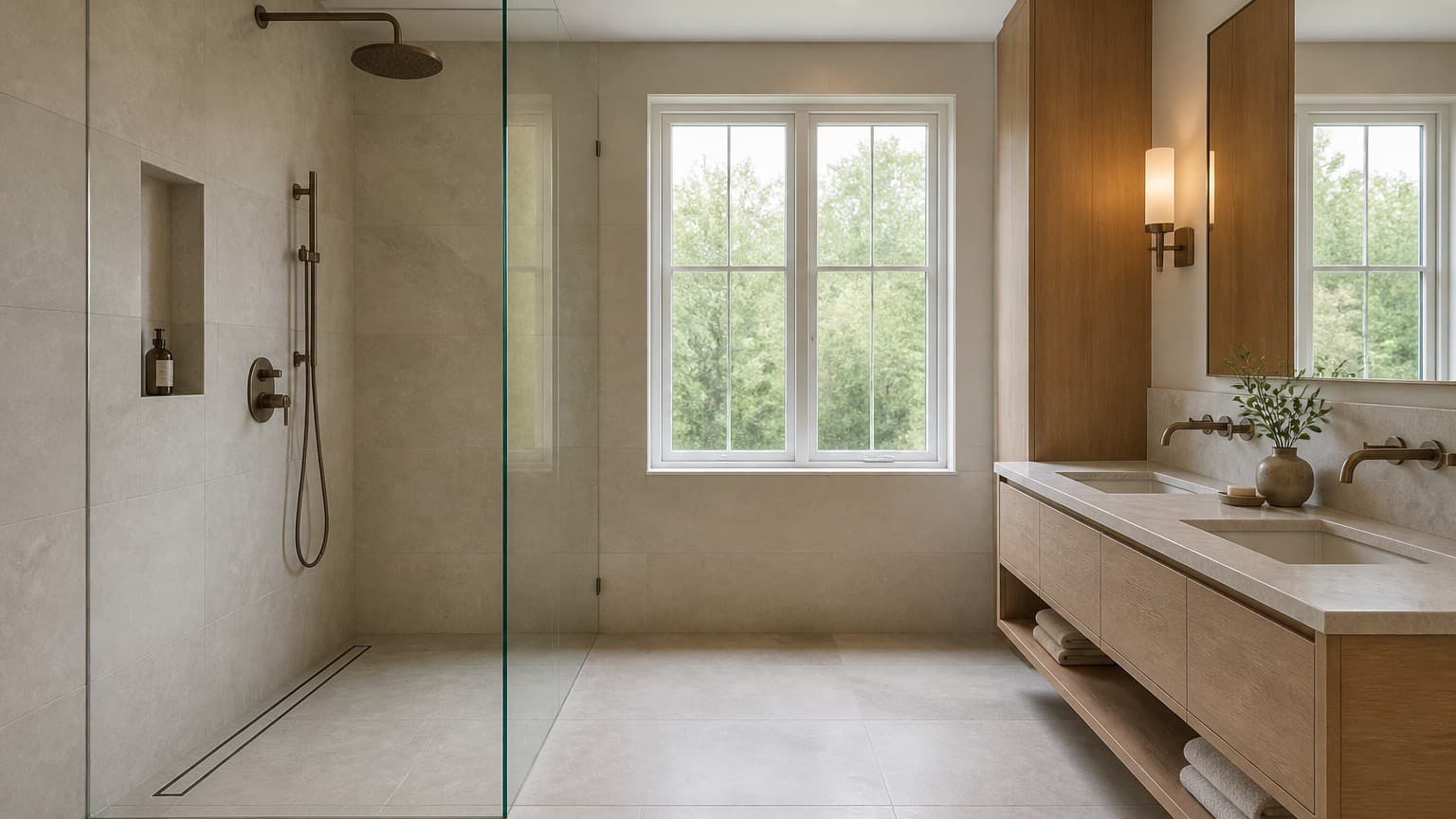
Full bathroom renovation with a curbless shower and heated stone-look floor
Completed September 2025
Keep reading
Modern porcelain imitates stone convincingly enough that the decision is rarely about appearance. It is about maintenance, tolerance for change, and where the material is going.
Most damage to finished surfaces is done by cleaning products, not by use. A short guide to keeping surfaces in the condition they were installed in.
For your project
If this article raised questions about your own bathroom, floor, or material choice, send us the specifics. Honest answers cost nothing.
Have photographs or a drawing? Upload them with your request — it usually saves a visit.